Role

UX designer

Duration

 Ongoing

Team

1 Program Manager

1 UX designer


Tools

Figma

Figma Make

Year

2025

Participation

100%

Project Overview

After the massive layoffs in the tech industry, many people reported experiencing acute stress, anxiety spikes and difficulty staying grounded during the day. Existing meditation apps were too long, too demanding or simply overwhelming. Engagement dropped fast.

I wanted to design an ultra simple tool that could help users reduce stress instantly in under five minutes, without endless menus, long sessions or cognitive overload.

Challenge

The first challenge was understanding how people actually experience stress in moments of overwhelm. Many tools assume users have time and emotional space to meditate, breathe deeply for 20 minutes or follow complex steps, but that is not the reality during high pressure or uncertainty.

To the point

Through quick cycles of interviewing and mapping emotional states, I reframed the problem. The solution had to be minimal, fast and emotionally safe. The app became a collection of five minute features that deliver relief without demanding mental effort.

Key Contributions

  • Conducted the initial problem framing after discussing the impact of layoffs with real users


  • Led the end to end UX process from research to high fidelity


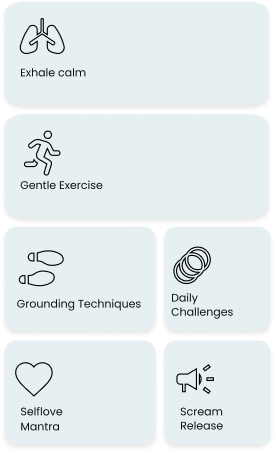
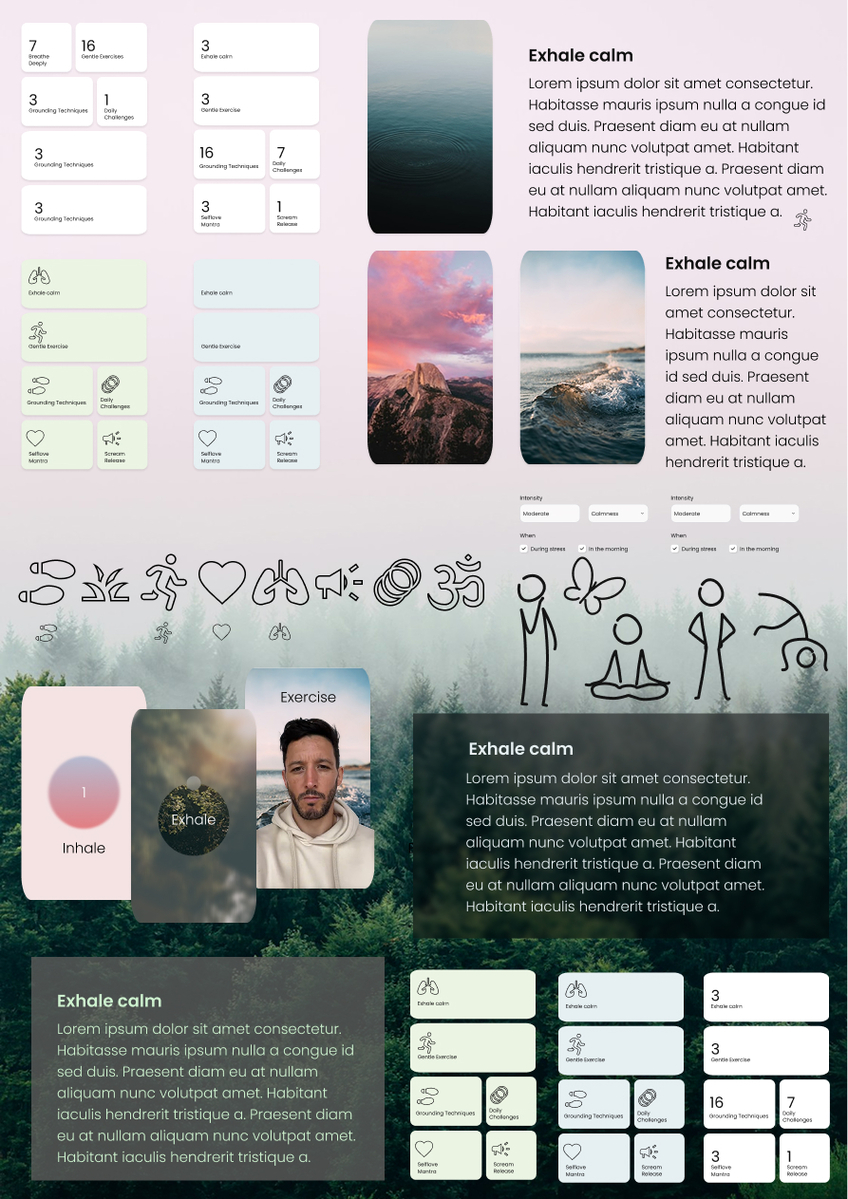
  • Designed the six core stress relief features


  • Built the entire interaction model centered on instant relief


  • Used Figma Make to create polished, high fidelity animations and refine the prototype significantly


  • Ensured simplicity as a design principle to keep engagement high


Empathy Work

  • People want fast relief, not long guided sessions


  • Overwhelm makes decision making harder, so the interface must be frictionless


  • Physical grounding is more accessible during stress peaks than abstract mindfulness


  • Emotional safety and speed matter more than perfection


Research Impact

The interviews revealed a huge gap between what users say they want and what they emotionally can manage when stress hits. This insight shifted the design strategy completely.


Research shaped:


  • The five minute rule


  • The selection of features


  • The interaction microcopy


  • The tone, which is calming but never patronizing


  • The visual identity, clean and spacious


This ensured the app feels like a supportive tool, not another task.

Problems we Aimed to Solve

  • Long meditation apps lose engagement fast


  • Users in distress cannot navigate complex menus


  • Breathing exercises feel boring without visual support


  • Overwhelmed users avoid opening wellness apps


  • No tools focusing on fast emotional release instead of long practice


The app solves these with ultra concise features, AI enhanced guidance and a calming visual structure.

Using Figma Make to Refine the Prototype

Figma Make became essential during the high fidelity phase.


We used it to:


  • Create micro animations for each feature


  • Build realistic transitions


  • Generate video like sequences for breathing and grounding


  • Test different emotional tones in seconds


  • Refine the interaction flow with an AI supported approach